
Quick Answer: What’s the Weather in New Jersey Right Now?
New Jersey sits in a humid continental climate zone in the north and central regions, shifting toward a humid subtropical influence along the southern coast. That means warm, sticky summers (typically 75–85°F), cold winters with occasional snow (25–40°F), and four genuinely distinct seasons in between. But here’s the catch most articles skip: New Jersey is small, only about 70 miles wide at its broadest point, yet it can have three completely different weather stories happening at once — sunny and 78°F on the Shore, overcast and 68°F in the northern highlands, and a passing thunderstorm rolling through the Pine Barrens. If you want the live, minute-by-minute answer, the National Weather Service or a real-time radar app will always beat any article. What this guide gives you is the context behind that number — why it’s happening, what to expect next, and how to plan your travel around it.
After spending more than a decade covering New Jersey’s climate patterns for local businesses, travel planners, and transportation services that depend on accurate forecasting, I’ve learned that “what’s the weather in New Jersey” is rarely a one-line question. It depends on where in the state you mean, when, and — just as importantly — how you’re planning to get around once you know the answer.
Why New Jersey Weather Isn’t One Answer — It’s Five

New Jersey is often lumped together as a single weather zone, but locals know better. The state breaks down into distinct micro-climates:
- North Jersey (Highlands & Skylands region): Cooler, hillier, and closer to a true continental climate. Expect earlier frosts, heavier snowfall, and noticeably chillier mornings than the rest of the state.
- Central Jersey: A transitional zone — warmer than the north, drier than the shore, and the most “average” weather in the state. This is also where the bulk of the state’s airport and business travel corridor runs, from Newark down through Middlesex County.
- Jersey Shore: Ocean-moderated. Summers feel a few degrees cooler near the water thanks to sea breezes, while winters run slightly milder than inland areas — though coastal storms and nor’easters hit here hardest.
- South Jersey / Pine Barrens: Sandier soil and lower elevation mean summer heat lingers longer, and this region tends to see the state’s hottest daytime highs.
- Newark/NYC-adjacent Metro Area: Urban heat island effect pushes temperatures a few degrees above surrounding suburbs, especially overnight — and this is where the state’s busiest airport traffic (EWR) has to contend with weather delays most often.
If you’re checking the forecast for a road trip, an outdoor event, or a flight out of Newark, knowing which New Jersey you’re asking about matters as much as the date.
Read more: BMW Limo Service NJ: Redefining Executive Travel with the BMW 7 Series
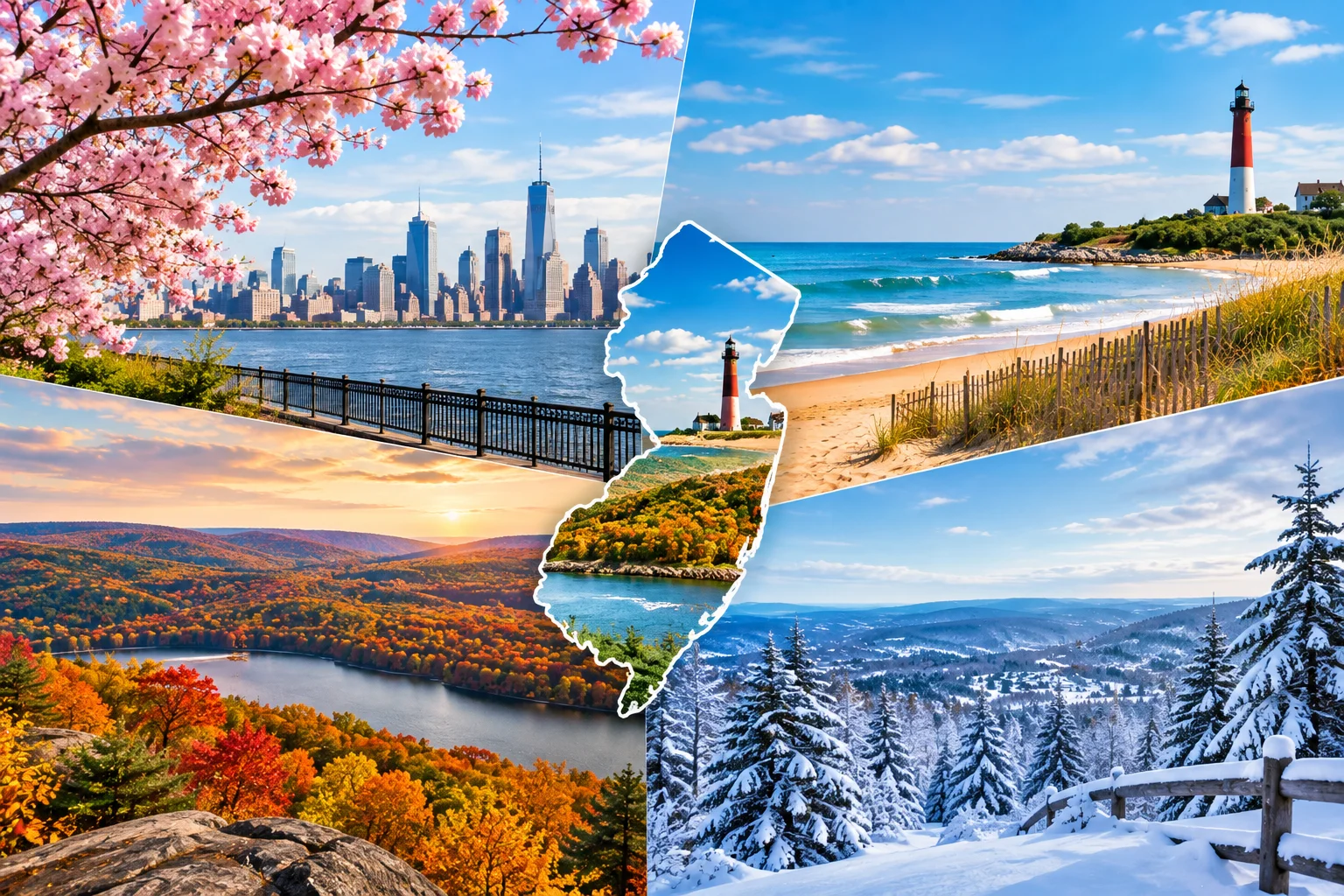
New Jersey Weather by Season
Spring in New Jersey (March–May)
Spring is New Jersey’s most unpredictable season. Early March can still bring a late snow flurry, while late May often delivers the first true summer-like days. Average highs climb steadily from the low 50s in March to the mid-70s by May. Rainfall is frequent but rarely severe — this is prime season for scattered showers, blooming dogwoods, and the occasional dramatic temperature swing of 20+ degrees in a single week. Sudden downpours can also snarl Central Jersey traffic with little warning, which is exactly when a pre-booked car service beats waiting on a rain-soaked curb for a rideshare.
Summer in New Jersey (June–August)
This is when New Jersey’s humidity becomes the headline. Daytime highs regularly sit between 80–88°F, with the Pine Barrens and inland South Jersey occasionally pushing past 90°F during heat waves. Humidity is the real story here — it’s not unusual for the “feels like” temperature to run 8–10 degrees above the actual reading. Afternoon thunderstorms are common, especially inland, while the Shore stays a few degrees cooler thanks to ocean air. This is also peak hurricane-watch season and peak travel season, which means a lot of airport runs to EWR, JFK, LGA, and PHL happening right when storm delays are most likely.
Fall in New Jersey (September–November)
Widely considered the state’s best season, fall brings crisp air, dropping humidity, and some of the most reliably pleasant weather of the year. September often still feels like late summer, but by mid-October, highs settle into the 60s, and by November, the first real cold snaps arrive. This is also when New Jersey’s foliage — especially in the northern Highlands — draws visitors from across the region, and when wedding and event season keeps limo and sedan services busy across Central NJ.
Winter in New Jersey (December–February)
Winter varies dramatically by region. North Jersey can see 30+ inches of snow annually, while the Shore and southern counties often get half that, with more rain-snow mix events. Average highs hover in the mid-30s to low 40s, with overnight lows frequently dipping into the 20s. January is typically the coldest month statewide. This is also nor’easter season — the storms responsible for New Jersey’s biggest single-day snow totals, coastal flooding, and the airport delays that make winter the hardest season to navigate without a plan.
Extreme Weather: What Makes New Jersey’s Forecast Tricky
A decade of tracking this state’s weather has taught me that averages only tell half the story. New Jersey deals with a handful of extreme weather patterns worth knowing:
- Nor’easters: Powerful coastal storms that can dump heavy snow inland and cause serious flooding along the Shore, sometimes within the same 24-hour system.
- Hurricane and tropical storm remnants: New Jersey isn’t a primary hurricane target, but it regularly absorbs the tail end of storms moving up the Atlantic coast, especially from late August through October. Hurricane Sandy remains the benchmark event locals still reference.
- Summer thunderstorm clusters: Fast-moving, sometimes severe, particularly in the state’s interior during humid July and August afternoons.
- Lake-effect and elevation snow: The northwestern Highlands can pick up snow totals well above what’s forecast for the rest of the state due to elevation and proximity to the Great Lakes wind patterns.
Average Temperatures and Precipitation at a Glance
- Annual average high: ~62°F
- Annual average low: ~42°F
- Hottest month: July (average high around 85°F)
- Coldest month: January (average low around 24°F)
- Average annual precipitation: 45–50 inches, spread fairly evenly across the year
- Average annual snowfall: 15–30 inches, heavily dependent on region (northern counties see significantly more than the Shore)
These are long-term averages, not a substitute for a live forecast — but they’re useful benchmarks when you’re planning weeks or months ahead rather than checking tomorrow’s conditions.
How New Jersey’s Weather Affects Local Travel — And Why a Local Car Service Matters
This is the part most weather guides skip entirely, but if you actually live, work, or fly in and out of New Jersey, it’s often the most useful section. New Jersey’s mix of coastal storms, sudden summer downpours, and unpredictable winter snow doesn’t just change what you wear — it changes how safely and reliably you can get where you’re going.
A few realities worth planning around:
- Rideshare surge pricing spikes hardest during bad weather. The exact moment you most need a ride — a sudden nor’easter, a flash flood warning, a delayed flight landing at 11 p.m. — is also when app-based rideshare pricing tends to triple or more. A flat-rate local car service locks in your price regardless of what the sky is doing.
- Airport delays cascade fast in storm season. Weather disruptions at EWR, JFK, LGA, or PHL can back up ground transportation for hours. A professional car service that tracks your flight and adjusts pickup time automatically removes one major variable from an already stressful travel day.
- Winter driving in Central Jersey isn’t always as plowed as you’d hope. Side roads and residential areas in Middlesex County and the broader Central NJ region can lag behind main highways when it comes to snow clearing. Letting an experienced local driver who knows the roads handle it is often the safer call.
- Coastal flooding and nor’easters can close routes with little notice. A local, experienced driver is far more likely to know an alternate route around a flooded intersection than a rideshare algorithm routing from out of state.
This is exactly the gap Aloz Car Service fills for the Central New Jersey area. Based in North Brunswick and serving Middlesex County and the wider Central NJ region since 1999, Aloz Car Service runs a fleet of luxury sedans, SUVs, stretch limos, and Sprinter vans built for exactly these scenarios — flat-rate pricing that doesn’t spike during a storm, flight-tracked airport transportation to and from EWR, JFK, LGA, and PHL, and local drivers who know Central Jersey’s roads well enough to reroute around whatever the weather throws at them. Whether it’s a summer thunderstorm delaying your flight home or a January nor’easter making the highway a gamble, booking ahead with a reliable local car service turns New Jersey’s unpredictable weather from a travel risk into a non-issue.
Best Time to Visit or Plan Around New Jersey Weather
If you’re scheduling travel, outdoor events, or airport pickups around New Jersey’s climate, here’s the practical breakdown:
- Best overall weather: Mid-September through mid-October — mild temperatures, low humidity, minimal rain.
- Best for beach and Shore trips: Late June through August, though early September often still delivers warm water and thinner crowds.
- Best for scenic drives and foliage: Mid-to-late October, particularly in North Jersey.
- Times to plan around weather risk (and book transportation ahead): Late August–October (tropical systems) and January–February (nor’easters and ice).
How to Check New Jersey Weather Accurately
For anything beyond general planning, always go to a live source rather than relying on averages:
- National Weather Service (weather.gov): The most authoritative, hyper-local source, broken down by county and even township.
- Radar apps: Best for tracking fast-moving summer storms in real time.
- Marine and coastal forecasts: Essential if you’re near the Shore, since ocean conditions can shift independently of inland weather.
- Local news meteorologists: Particularly useful during nor’easter or hurricane season, when regional nuance matters most.
Frequently Asked Questions
What is New Jersey’s climate classified as?
New Jersey has a humid continental climate in the north, transitioning to humid subtropical conditions in the south and along the coast, giving the state four distinct seasons.
Does it snow a lot in New Jersey?
It depends heavily on region. North Jersey can average 30+ inches of snow a year, while southern and coastal areas often see closer to 10–15 inches, with more rain-snow mix events.
What is the hottest time of year in New Jersey?
Late July into early August typically brings the year’s highest temperatures and humidity levels, especially inland and in South Jersey.
Is New Jersey weather different at the Shore versus inland?
Yes, significantly. Ocean breezes keep Shore towns a few degrees cooler in summer and slightly milder in winter compared to inland areas just 20–30 miles away.
When is hurricane season a concern in New Jersey?
Roughly June through November, with the highest risk of tropical impact between late August and October.
Is it better to book a car service instead of driving during bad weather in NJ?
In most storm scenarios, yes. Flat-rate local car services avoid the surge pricing that hits rideshare apps during bad weather, and experienced local drivers are generally better equipped to navigate flooded or snow-covered routes than an out-of-town rideshare driver.
Does bad weather affect airport transportation in New Jersey?
Yes — nor’easters, thunderstorms, and coastal flooding can all delay ground transportation to and from EWR, JFK, LGA, and PHL. Booking a car service that tracks your flight status helps absorb those delays automatically.
Final Thoughts
Understanding what’s the weather in New Jersey means understanding that the state rarely gives one answer — it gives five, depending on where you’re standing and what week of the year it is. Whether you’re planning a Shore weekend, a fall drive through the Highlands, or an airport run in the middle of a January storm, pairing this seasonal and regional context with a live forecast source — and a reliable local car service for the days weather doesn’t cooperate — will always give you the smoothest way through New Jersey’s unpredictable climate.