
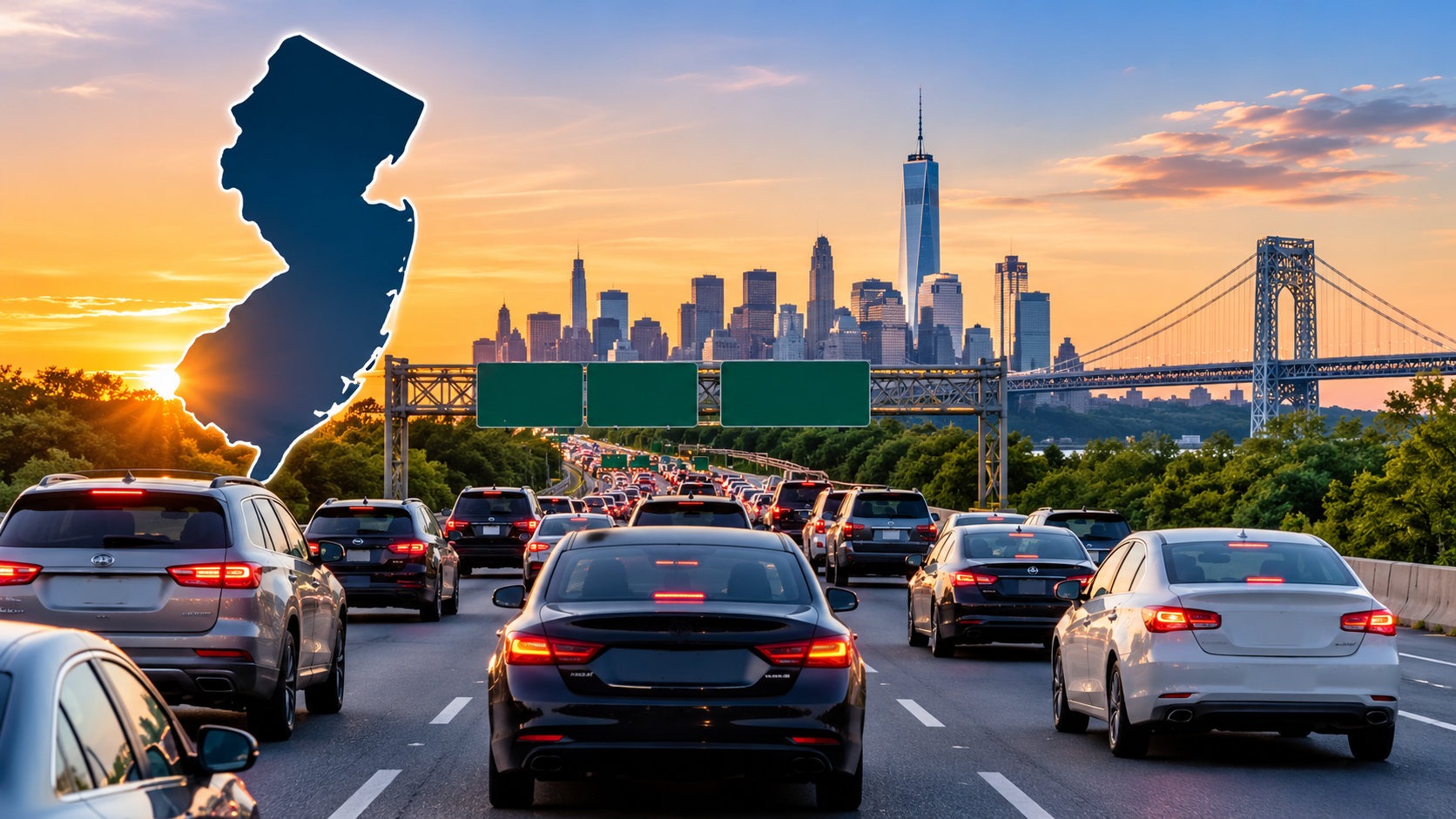
- Quick Answer: Weekday rush hour in NJ runs from about 6:00 to 9:30 a.m. and 4:00 to 7:00 p.m. Traffic is usually worst from 7:00 to 8:30 a.m. and 4:30 to 6:30 p.m. Near the George Washington Bridge and the Lincoln and Holland tunnels, delays can start before 6 a.m. and last past 7:30 p.m. Tuesday through Thursday are the busiest days.
Picture this: you merge onto the Turnpike, coffee in hand, feeling good. Then your GPS arrival time jumps 10 minutes. Then 20. Sound familiar? Welcome to rush hour in New Jersey.
New Jersey commutes really are long. According to 2024 Census data, New Jersey has the third-longest average commute in the country at 31.9 minutes, behind only New York and Maryland. Traffic research firm TomTom also points out that hybrid and remote work didn’t cut commuting overall in 2025. It concentrated trips on certain days and spread the old “rush hour” over a longer stretch of the day.
This guide covers when rush hour hits, which roads are worst, what each toll agency counts as “peak,” and how to get your time back.
What Time Is Rush Hour in NJ, Hour by Hour?
We combined official peak-hour windows from the Port Authority, the NJ Turnpike Authority, and NJ Transit with recent traffic data. Here’s a typical weekday:
| Time (Weekdays) | Traffic Level | What to Expect |
|---|---|---|
| 5:00–6:00 a.m. | ● Building | Early commuters and trucks; GWB approaches start to fill. |
| 6:00–7:00 a.m. | ● Heavy | Rush hour starts; Hudson River crossings back up. |
| 7:00–8:30 a.m. | ● Peak | Worst of the morning on almost every major highway. |
| 8:30–9:30 a.m. | ● Easing | Traffic starts moving, but bottlenecks linger. |
| 9:30 a.m.–2:30 p.m. | ● Moderate | Best daytime window (watch for work zones). |
| 2:30–4:00 p.m. | ● Building | School dismissal, early leavers, Friday getaways. |
| 4:00–6:30 p.m. | ● Peak | Worst of the evening, especially heading west from NYC. |
| 6:30–7:30 p.m. | ● Easing | Tunnels and bridges are often still slow. |
| After 7:30 p.m. | ● Light | Smooth driving on most roads. |
Weekday Traffic Patterns
Typical New Jersey weekday traffic conditions
New Jersey Weekday Traffic Guide
Typical weekday traffic patterns and the best times to travel.
Weekday Traffic Patterns
Typical New Jersey weekday traffic conditions
Morning Rush Hour in NJ (6:00 to 9:30 a.m.)
Weekday rush hour in New Jersey begins around 6 a.m., hits its peak around 7 a.m., and usually starts to ease at about 8:30 a.m. If you’re heading into Manhattan, plan for the worst of it between 7:00 and 8:30.
Evening Rush Hour in NJ (4:00 to 7:00 p.m.)
The evening rush typically runs from 4:00 to 7:30 p.m. The evening crunch lasts longer than the morning one because school pickups, errands, and commuters coming home from NYC all overlap.
Why NJ Now Has “Rush Hours,” Not a Rush Hour
According to TomTom, Tuesday through Thursday are now the main commuting days, and rush-hour traffic is spreading across longer stretches of time. That’s why the Turnpike can be packed at 3 p.m. on a Wednesday but surprisingly calm on a Monday morning.
Official Peak Hours: What NJ Toll and Transit Agencies Say
Each agency defines peak hours a little differently. These are the windows that change your toll or ticket price:
| Agency / System | Weekday Peak Window | Why It Matters |
|---|---|---|
| Port Authority (GWB, Lincoln, Holland, Goethals, Outerbridge, Bayonne) | 6:00–10:00 a.m. and 4:00–8:00 p.m. | Higher E-ZPass tolls during peak travel hours. |
| NJ Turnpike | 7:00–9:00 a.m. and 4:30–6:30 p.m. | NJ E-ZPass off-peak discounts apply outside these hours. |
| NJ Transit Rail (to/from Newark, Hoboken, NY Penn) | Arrive 6:00–10:00 a.m., depart 4:00–7:00 p.m. | Off-peak round-trip tickets aren’t valid on peak trains. |
| NYC Congestion Relief Zone | 5:00 a.m.–9:00 p.m. (weekends: 9:00 a.m.–9:00 p.m.) | Full $9 toll applies to most cars. |
The details:
- Port Authority crossings: Peak hours at Port Authority facilities are 6 to 10 a.m. and 4 to 8 p.m. on weekdays. In 2026, drivers pay $16.79 with E-ZPass during peak hours, and less off-peak.
- NJ Turnpike: Turnpike peak hours are 7:00 to 9:00 a.m. and 4:30 to 6:30 p.m., Monday through Friday, based on when you enter. All other times, including weekends, count as off-peak, and the NJ E-ZPass off-peak rate is 10% lower.
- NJ Transit: The rail peak windows match NJ Transit’s bike rules. Non-folding bikes aren’t allowed on weekday trains arriving in Newark, Hoboken, or New York between 6:00 and 10:00 a.m., or leaving those stations between 4:00 and 7:00 p.m.
- Manhattan congestion pricing: The peak period runs 5 a.m. to 9 p.m. on weekdays and 9 a.m. to 9 p.m. on weekends.
Read more: The Complete NJ Transit Rider’s Guide from NYC to Bay Head
NJ Rush Hour by Road: Where Traffic Hits Hardest
George Washington Bridge and I-95 in Fort Lee
This is the big one. In the 2026 truck bottleneck rankings from the American Transportation Research Institute, Chicago passed the I-95 and Route 4 interchange near the GWB in Fort Lee, which had been #1 on the list for seven years. Fort Lee is still #2 in the country, with an average speed of just 28.2 mph.
What a typical morning looks like: on one weekday, 511NJ showed delays on the GWB upper level just before 7 a.m., with a 45-minute trip on I-95 from I-80 to the Alexander Hamilton Bridge.
Lincoln Tunnel and the Route 495 Helix
Route 495 links the Turnpike and Route 3 to the tunnel, and more than 150,000 drivers use it every day. At the evening peak, 511NJ often shows 20 to 25 minute trips from Turnpike Exit 16E to the New York side.
Holland Tunnel
The Holland is famous for long backups through Jersey City, but it has gotten noticeably faster since congestion pricing started (details below). Even so, plan for 20 to 25 minutes from Turnpike Exit 14C at rush hour.
NJ Turnpike Hot Spots
Common rush-hour trouble spots include the Goethals Bridge exit, the Newark and Jersey City interchanges, and the approach to the Lincoln Tunnel. On a recent evening, 511NJ reported heavy-volume delays outside Interchange 13 (I-278/Goethals Bridge) in Linden and delays entering at Interchange 15E (US 1&9) in Newark, both around the 6 p.m. peak.
Garden State Parkway
On weekdays, the Parkway backs up through North and Central Jersey. Traffic data firm INRIX once ranked the stretch between the Union and Essex toll plazas as the worst traffic corridor in the state. In summer, Shore traffic takes over (more on that below).
Central and South Jersey Trouble Spots
North Jersey isn’t the only place with bad traffic. Well-known rush-hour jams include I-76 near the Walt Whitman Bridge, I-287 between Piscataway and Edison, US-22 east of I-287, US Route 30 near the Benjamin Franklin Bridge, and US Route 1 between Plainsboro and New Brunswick. South Jersey drivers also feel Philadelphia’s traffic, where delays went up 31% in 2025.
Best and Worst Times to Drive in New Jersey
Worst Days: Tuesday, Wednesday, Thursday
With hybrid schedules, these midweek days carry the heaviest commuting traffic. TomTom found that New York’s single worst traffic day in 2025 was Thursday, October 30, when congestion reached 147% at 3 p.m.
Fridays: Lighter Mornings, Earlier Afternoons
Friday mornings are often easier, but the afternoon rush starts early. Before holiday weekends, one commuter app found the busiest hours are usually 1:30 to 3:30 p.m., so leaving during the normal 4 to 6 p.m. rush can actually be faster.
Weekends: No Classic Rush Hour, Plenty of Traffic
There’s no commuter rush on weekends, but midday shopping and errands pack Route 17, Route 4, and Route 1 on Saturdays. A local tip: Bergen County’s blue laws close most retail stores on Sundays, so Paramus is noticeably quieter then.
Best Windows to Drive
- Before 6:00 a.m. to get ahead of the morning rush
- 10:00 a.m. to 2:30 p.m. for midday trips
- After 7:30 p.m. for clear roads (but stay alert, see below)
A Safety Note About Evenings
Lighter traffic doesn’t mean safer roads. One analysis of NHTSA crash data found that in New Jersey, 8 to 8:59 p.m. is the most dangerous hour of the day to drive, partly because more aggressive and reckless drivers and trucks are on the road then.
Holiday and Seasonal Rush Hours in NJ
Thanksgiving Week (Coming Up: November 26, 2026)
The Wednesday before Thanksgiving is one of the worst travel days of the year. If you have to drive Wednesday, leave by 2 p.m. or after 6 p.m.; the pre-holiday rush starts about two hours earlier than usual. Thanksgiving Day itself has the lightest traffic of the week.
Summer Jersey Shore Traffic
Shore traffic follows its own schedule. Friday afternoon is still the worst time to head south. Thursday from about 1 to 7:30 p.m. is now a problem too, and Sunday from 2 to 8 p.m. is the worst window heading north. For Memorial Day 2026, INRIX predicted that the worst moment to leave the NYC area was Friday at 2:15 p.m., with Shore-bound Parkway traffic up 102%.
School Year (September to June)
School buses and drop-off lines add to local traffic from about 7:00 to 8:30 a.m. and 2:30 to 3:30 p.m. Summer mornings are usually a bit lighter.
How Congestion Pricing Changed Rush Hour for NJ Drivers
Since January 2025, Manhattan below 60th Street has a toll. Most drivers pay $9 to enter during peak daytime hours. The program is staying in place for now: on March 3, 2026, a federal judge ruled that the Trump administration has no authority to end it.
What it means for New Jersey commuters after one year:
- Holland Tunnel trips are 51% faster, Lincoln Tunnel trips are 24.7% faster, and I-495 toward the Lincoln Tunnel is 15% faster. 6sqft
- Traffic volume at the Holland Tunnel dropped 3.4% and the Lincoln Tunnel dropped 5.5%, while the George Washington Bridge, which many drivers use to avoid the zone, went up a little over 1%..
Bottom line: the tunnels move faster, but the GWB is still busy, so plan GWB trips around peak hours.
Driving vs. Taking the Train During Rush Hour
Sometimes the fastest way through rush hour in NJ is to skip the car.
- NJ Transit is huge, with more than 925,000 weekday trips on 264 bus routes, three light rail lines, and 12 commuter rail lines. Note that off-peak round-trip tickets aren’t valid on weekday peak-period trains.
- PATH can save a lot of time. The PATH train from Newark Penn Station to Lower Manhattan takes about 40 minutes, while driving the same route in the morning rush can take up to 1 hour and 50 minute.
- Buses through the Lincoln Tunnel have their own lane in the morning. According to NJDOT, more than 1,850 buses carrying over 63,000 passengers ride from the North Bergen Park and Ride across Route 495 to the Port Authority Bus Terminal every day.
9 Ways to Beat Rush Hour in NJ
- Leave before 6:00 a.m. or after 9:30 a.m. Leaving even 30 minutes earlier can save a lot of time.
- Check 511NJ before you go. . You can also dial 511 for live conditions.
- Get NJ E-ZPass to pay the lower off-peak Turnpike rate and avoid higher Tolls by Mail charges.
- If you’re hybrid, work in the office Monday and Friday. Tuesday through Thursday are the most crowded days.
- Take the tunnels if Midtown or Downtown is your destination. They’ve moved much faster since congestion pricing started.
- Use the train or bus for NYC trips. PATH, NJ Transit, and the Lincoln Tunnel bus lane often beat driving at peak.
- Avoid the 2:00 to 3:30 p.m. Friday getaway before holiday weekends.
- Head to the Shore before 9 a.m. or after dark in summer.
- Stay extra alert from 8 to 9 p.m., which is New Jersey’s most dangerous driving hour even though traffic is lighter.
Read more: Thanksgiving Travel Newark Airport Tips: The 2026 Insider Survival Guide
FAQ: Rush Hour in New Jersey
What time is rush hour in NJ in the morning?
Morning rush hour in NJ runs from about 6:00 to 9:30 a.m. on weekdays, and it’s worst from 7:00 to 8:30 a.m. Near the George Washington Bridge and the Hudson River tunnels, backups can start as early as 5:30 a.m.
What time does evening rush hour end in NJ?
Evening rush hour usually ends between 7:00 and 7:30 p.m. Port Authority bridges and tunnels charge peak tolls until 8:00 p.m., and backups toward the Holland and Lincoln tunnels can last until then.
Is there rush hour on weekends in New Jersey?
There’s no commuter rush on weekends, but midday Saturday traffic gets heavy near shopping areas like Route 17, Route 4, and Route 1. In summer, Friday afternoons and Sunday evenings bring heavy Shore traffic on the Garden State Parkway.
What is the worst day for traffic in NJ?
Tuesday, Wednesday, and Thursday are the worst commuting days because that’s when most hybrid workers go into the office. The day before Thanksgiving and summer Fridays are usually the worst travel days of the year.
What are NJ Transit peak hours?
NJ Transit rail peak hours cover weekday trains arriving in Newark, Hoboken, or New York between 6:00 and 10:00 a.m., and trains leaving those stations between 4:00 and 7:00 p.m. Off-peak round-trip tickets aren’t valid on those trains.
What are peak toll hours for the GWB, Lincoln Tunnel, and Holland Tunnel?
Port Authority peak toll hours are weekdays 6:00 to 10:00 a.m. and 4:00 to 8:00 p.m. In 2026, the E-ZPass peak toll for cars is $16.79, and tolls are only collected heading into New York.
When is the best time to drive from NJ to NYC?
The best weekday times are before 6:00 a.m., between 10:00 a.m. and 2:30 p.m., or after 8:00 p.m. Those times avoid the worst traffic and Port Authority peak tolls.
What is the most dangerous time to drive in NJ?
An analysis of NHTSA crash data found that 8:00 to 8:59 p.m. is New Jersey’s most dangerous hour to drive, mainly because more aggressive drivers and trucks are on the road then.
The Bottom Line
So, what time is rush hour in NJ? Plan around 6:00 to 9:30 a.m. and 4:00 to 7:00 p.m. on weekdays, with the worst traffic midweek and near the Hudson River crossings. If you can, leave a little earlier, check 511NJ, use E-ZPass, and take the train when NYC is your destination.